
Company Profile
Our construction engineering staff holds current certifications in Bonded Post – Tensioning – Field Installation from PTI and Concrete Transportation Construction Inspector from ACI. We have also completed requirements for the Safety Inspection of In-Service Bridges.
KSF, Inc. has experience and special expertise in following structures:
- Highway bridges
- Parking structures
- High rise buildings
- Single and multi-family housing
- Commercial structures
- Underground utility boxes and culverts
- Airport support facilities
- Retaining structures
KSF, Inc. provides the following engineering services:
- Analysis and design of precast concrete elements
- Analysis and design of post-tensioned concrete structures including staged construction
- Construction engineering including falsework design; erection methodology; design of supports for lifting mechanisms such as cranes and jacks; and innovative construction methods
- Concrete research and development
- Preparation of prestressed (pre-tensioned and or post-tensioned) precast working and form drawings
- Evaluation of concrete material conformance
- Seismic retrofit utilizing fiber reinforced polymer and external post tensioning
- Linear and non-linear dynamic modeling
- Existing structure analysis and rehabilitation
- Concrete repair
- Load testing, field measurement of deflections and stresses/strain monitoring
- Construction engineering services for construction managers and Department of Transportation
Analysis Capabilities
KSF, Inc. is able to conduct finite element analyses using the LUSAS, MIDAS, and ADAPT computer programs. We can perform seismic, linear, non-linear and staged construction analyses. We also incorporate soil structure interaction, where applicable, to capitalize on the benefits provided by the soil.
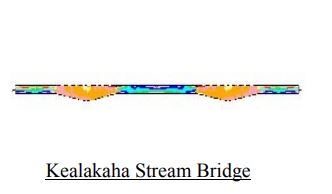
For Kealakaha Stream Bridge, we modeled the box girder construction, post-tensioned spliced girders, abutment to abutment post-tensioning, and seismic base isolation that was utilized to reduce demand on the drilled shaft foundations. KSF, Inc. conducted seismic analysis via spectrum and time-dependent dynamic analyses for Seismic Zone 4. We also performed staged construction analysis of the post- tensioning sequencing, as well as non-linear analysis of the concrete creep utilizing both the historical and anticipated characteristics of Hawaiian concrete.
Concrete Knowledge
KSF, Inc. developed a research program to create a high performance deck mix and drilled shaft concrete considering segregation, rheological effects, and mass concrete issues. As a result, concrete decks for new bridges in Hawaii consist of a high performance concrete utilizing synthetic air entrainment and a combination of synthetic fibers that minimizes the high shrinkage and creep characteristics exhibited by the typical local concrete. In addition, the concrete materials and proportions selected minimized bleeding and increased the fatigue endurance limit. Details of this concrete deck mix were presented in the paper entitled, “Hawaii Department of Transportation High Performance Deck Mix”.
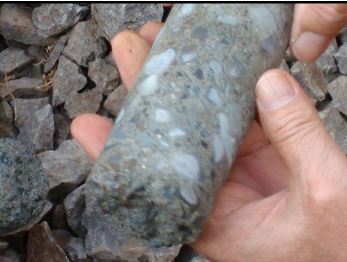
We have also created a specification that details a structural concrete for drilled shafts with special characteristics for workability, segregation, bleeding, in-place concrete density requirements and mass concrete. The resulting concrete mix design accounted for the typical characteristics of local concrete and reduced hydration heat and bleed water. Lower heat minimized internal cracking, and the reduction of bleed water resulted in less segregation of the concrete mix. The end result is a concrete drilled shaft that is superior to those previously constructed.
Innovative Construction Methods
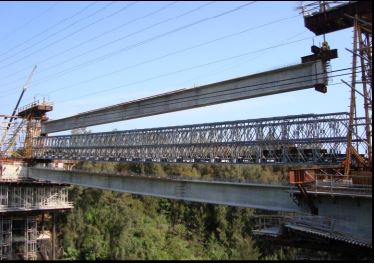
Our extensive experience in construction enables us to provide designs that are cost effective with minimal impact on the community. KSF, Inc. conceived a scheme to launch 205 ft girders across a ravine in order to complete the middle span of Kealakaha Stream Bridge. We detailed a rail system to splice 50 ft girder segments in a limited work area. Once the girder was completed, it was launched on a temporary bridge and moved into it final position with strand jacks. This approach allowed the contractor to work in the confines provided and reduced anticipated costs.